Light rail does not rewrite a housing market overnight, but it can change how buyers, sellers, and investors see a city. That is exactly why Lynnwood has become such an interesting market to watch since Link service arrived in 2024. If you are trying to understand what the Lynnwood Link extension really means for home values, demand, and future development, this guide will help you separate the headlines from the facts. Let’s dive in.
Light rail changed access first
When Sound Transit opened the 8.5-mile Lynnwood Link extension on August 30, 2024, it added four stations and brought light rail service into Snohomish County for the first time. Lynnwood City Center became the northern terminus of the extension, giving residents direct access into the broader regional Link network.
That matters because transportation access often influences housing decisions long before it shows up clearly in pricing data. In Lynnwood, the station is not just a rail stop. It also functions as a larger transit hub with bus connections, parking, and pedestrian access built into the station area.
Sound Transit describes the Lynnwood City Center station campus as including a five-story, 1,670-space parking garage, while the broader transit center facility has 1,896 parking spaces. The site also connects with Sound Transit routes 1, 2, and 512, plus Community Transit service.
For buyers, that means Lynnwood is not only a walk-to-rail story. It is also a drive-to-rail and transfer-to-rail market, which expands the number of people who may see the area as practical for commuting and daily travel.
Lynnwood home prices are rising, but not for one reason
It is tempting to assume that a new light rail line automatically pushes prices up across an entire city. The research does not support that kind of simple conclusion.
Seattle-area research on light rail and home values is mixed. A 2018 quasi-experimental study of Seattle station areas found positive service impacts in only one of seven primarily residential station areas, with negative estimates in two and small or statistically insignificant effects in the rest.
Another University of Washington study found no statistically significant price effect during the pre-construction and construction periods. It did find a significant positive effect after construction for homes within about a quarter-mile to half-mile of a station.
The practical takeaway is straightforward. Rail access tends to matter most after service opens, and the effect appears strongest where station access is easy and the surrounding area works well for walking and biking.
That context is important in Lynnwood because the local market is already active. Redfin reported a March 2026 median sale price of $720,000, up 9.9% year over year, with homes selling in about 12 days and receiving two offers on average.
Zillow reported a March 31, 2026 median sale price of $727,333, an April 30, 2026 average home value of $786,227, 215 homes for sale, and a 10-day median time to pending. NWMLS reported a Snohomish County April 2026 median sales price of $750,000 and noted that county inventory rose 58% year over year.
Because these sources use different methods and time periods, the safest conclusion is that Lynnwood is trading in the low-to-mid $700,000s and remains competitive. Light rail is part of that story, but inventory levels, mortgage rates, and broader county conditions still shape the market in a big way.
City Center is the bigger housing story
If you want to understand how light rail is shaping Lynnwood’s housing market, look beyond resale prices alone. The more powerful change may be what is happening around Lynnwood City Center.
According to the City of Lynnwood, the City Center is planned as a vibrant commercial center with more than 500 multifamily units under construction, another 1,400 units entitled, more than 500,000 square feet of office planned, and another 200,000 square feet of retail planned. The city also says land-use plans and zoning are in place for 9.1 million square feet of high-density development.
That is a major signal. Light rail is not operating in isolation. It is part of a coordinated land-use and infrastructure strategy that is reshaping how the area grows.
In February 2026, the Puget Sound Regional Council redesignated Lynnwood as a regional growth center. PSRC reports that the Lynnwood City Center and Alderwood plan is designed to connect the two areas through multimodal transportation and serve two Link stations.
PSRC also says the center has a current density of 27 people per acre and a planned density of 72 people per acre, with 46% of planned growth expected to be residential. That tells you the region is planning for a more compact, mixed-use, transit-connected future in this part of Lynnwood.
Most new development is multifamily and mixed-use
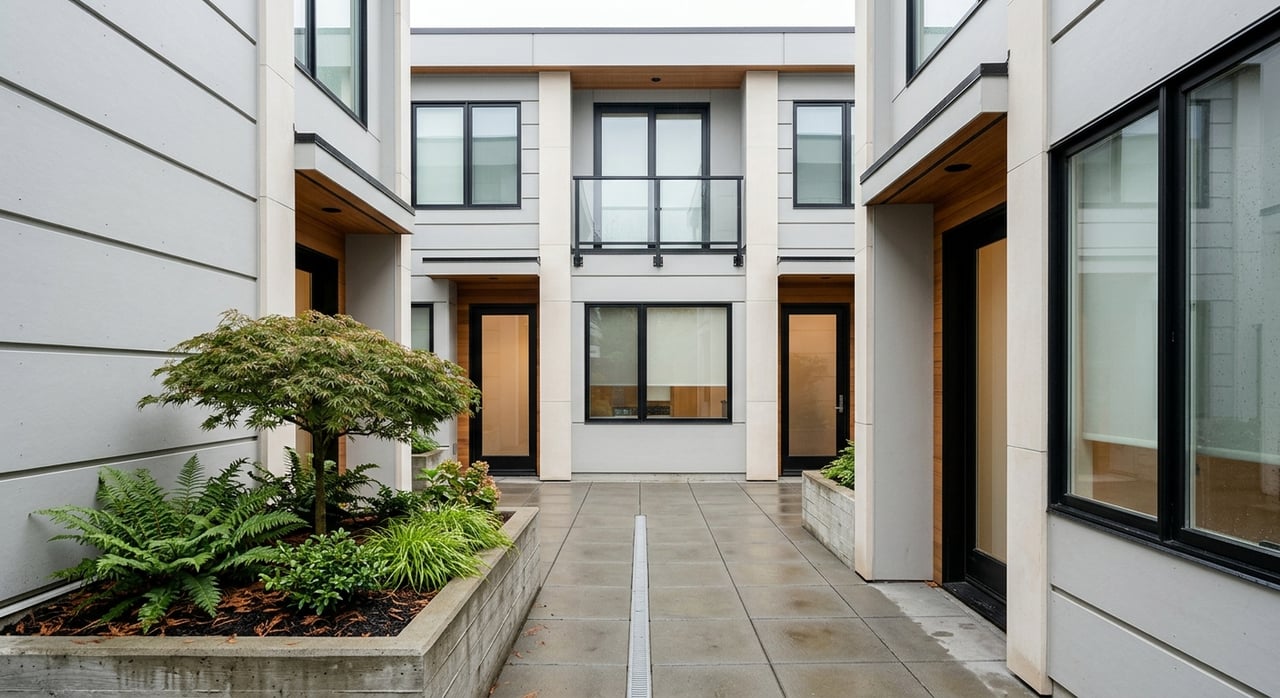
So what kind of housing is light rail encouraging in Lynnwood? Based on city and regional planning documents, the clearest answer is multifamily and mixed-use development.
One of the biggest examples is Northline Village, a 19.1-acre mixed-use project connected to the City Center Promenade and station area. The city says the project is planned for 1,369 residential units, more than 500,000 square feet of office, more than 250,000 square feet of retail, two park spaces, and new grid streets.
Another example is Ember Apartments, which includes 361 units and about 10,000 square feet of commercial space. The project also includes 73 income-restricted units through the city’s Multifamily Tax Exemption framework.
Sound Transit is also planning a 167-unit affordable housing transit-oriented development project on a 1.5-acre site directly adjacent to Lynnwood City Center Station. Taken together, these projects show that the station area is evolving toward denser housing options tied to retail, public space, and transit access.
The City of Lynnwood also notes that its Multi-Family Residential Property Tax Exemption program applies to apartments and condominiums in the City Center subarea for eight or twelve years. That helps explain why so much of the development pipeline near the station is multifamily rather than detached-home infill.
Walkability and connections matter
A station alone does not create a strong housing premium. The surrounding experience matters too.
That is why Lynnwood’s public projects around City Center are worth watching. The 44th Ave W underpass project is intended to connect the Interurban Trail and the City Center Transit Station to south Lynnwood while improving non-auto access between the station and nearby businesses and homes.
The 42nd Ave W project is described by the city as a complete-street corridor in the heart of the Regional Growth Center. Connect Lynnwood also focuses on safer walking, biking, and transit access.
The future City Center Park is planned as a 1.65-acre centerpiece for the district, with construction currently anticipated around 2032. Together, these projects suggest that Lynnwood is using light rail as a catalyst for a more walkable, mixed-use city center, not just a transportation upgrade.
What this means if you are buying
If you are buying in Lynnwood, light rail is best understood as a quality-of-access feature. It may matter more if a home has easy station access, a practical street network, and nearby daily conveniences.
The current evidence does not support a blanket assumption that every home in Lynnwood gets the same rail-related boost. Instead, station proximity, ease of connection, and neighborhood layout are likely to shape how much value buyers place on transit access.
This is especially relevant if you are comparing condos, townhomes, and newer homes near City Center with properties farther away. Two homes in the same city can appeal to very different buyers depending on how easy it is to reach the station, bus service, and surrounding amenities.
What this means if you are selling
If you are selling, transit access is absolutely worth highlighting, but it should be framed in a property-specific way. Buyers respond better to practical benefits than broad claims about future appreciation.
That means focusing on details like commute convenience, connections to the regional rail network, nearby mixed-use development, and how the home fits into daily routines. In a market where homes are still moving quickly, pricing, condition, and presentation matter just as much as the light rail story.
This is where careful positioning really counts. A home near Lynnwood City Center may attract interest for different reasons than a home in a more car-oriented part of the city, and your marketing should reflect those differences clearly.
What this means for small investors
For small investors, Lynnwood’s station area stands out because the change is policy-driven as well as market-driven. The city has aligned zoning, tax-exemption tools, planned-action and SEPA streamlining, and transportation improvements to support growth in City Center.
That kind of alignment often matters more than a single headline about transit. It can influence what gets built, how quickly an area changes, and what kinds of housing become more common over time.
In Lynnwood, the visible pattern today points toward multifamily, mixed-use, and transit-oriented projects rather than a broad detached-home redevelopment story. If you are evaluating opportunities, it helps to view light rail as one piece of a larger planning framework.
The bottom line on Lynnwood Link
Light rail is shaping Lynnwood’s housing market, but mostly by improving access and accelerating City Center redevelopment rather than creating an automatic citywide price jump. The strongest evidence suggests that rail-related value is most meaningful after service begins and in places where station access and walkability are strong.
At the same time, Lynnwood remains a market influenced by broader housing fundamentals. Pricing, inventory, mortgage rates, and local development patterns still matter.
If you are weighing a move, a sale, or a purchase near Lynnwood City Center, the most useful question is not whether light rail changed everything. It is how this new access fits into the specific property, location, and long-term direction of the area.
If you want help evaluating how transit access, future development, and market timing may affect your next move in the Puget Sound region, connect with Rebecca Mitsui. You will get thoughtful guidance, clear strategy, and local insight tailored to your goals.
FAQs
How did Lynnwood light rail change the local housing market?
- The biggest change appears to be improved access to the regional transit network and stronger momentum for City Center redevelopment, rather than a simple citywide jump in home prices.
Do homes near Lynnwood City Center Station automatically sell for more?
- Not automatically. Seattle-area research is mixed, and the strongest positive effects tend to appear after service opens and within a relatively short distance of a station.
Is Lynnwood still a park-and-ride market after light rail opened?
- Yes. The Lynnwood City Center station area includes major parking capacity and bus connections, so it serves both walk-to-rail users and people who drive or transfer to reach the train.
What types of housing is light rail encouraging in Lynnwood?
- Current planning and development activity point mostly to multifamily, mixed-use, and some affordable housing near the station area.
Is Lynnwood a competitive market for buyers right now?
- Yes. Current market data shows homes are generally selling quickly, with prices in the low-to-mid $700,000s, though inventory and countywide conditions still influence competition.
What should Lynnwood sellers emphasize when marketing a home near light rail?
- Sellers should focus on practical benefits such as commute convenience, station access, nearby amenities, and the home’s overall condition and presentation.
